Emotional neglect in marriage: what it looks like, and what to do
 Romy Ashwell · Updated October 30, 2026
Emotional neglect in marriage is a pattern of absence rather than cruelty: your partner consistently doesn’t notice, respond to or ask about your feelings, needs and inner life. Examples include forgetting things that matter to you, turning away when you reach out, no curiosity about your day, and leaving you to carry the relationship alone. You can be married, safe and still deeply lonely.
In the US, the National Domestic Violence Hotline is free, confidential and open 24/7: call 1-800-799-7233 or text START to 88788. If you are thinking about harming yourself, call or text 988 (988 Suicide & Crisis Lifeline). In an emergency, call 911.
M. was never cruel. If anything, people thought he was charming. He just wasn’t there. I would say, “Look at that sky,” and he wouldn’t look up from his phone. I told him about a hard week at work and he said, “Mm.” He forgot my birthday dinner on my thirtieth birthday and texted, “Something came up. You know how work is. Don’t wait for me.”
I had a husband. I ate most dinners alone.
What is emotional neglect in a marriage?
It’s not about one bad week. It’s a long pattern of your emotional life going unnoticed: your feelings, needs, worries and joys don’t seem to register with the person you married. It’s often hard to name precisely because nothing happens. The harm is in what doesn’t.
Examples of emotional neglect
- He doesn’t ask about your day, and when you tell him, he doesn’t follow up.
- He forgets things that matter to you: the appointment, the anniversary, your mother’s surgery.
- When you cry, he leaves the room or changes the subject.
- You plan every date, trip and celebration, or none happen.
- He’s attentive in public and absent at home.
- You’ve stopped bringing things up because nothing changes.
- You feel more alone with him than when you’re actually alone.
The research on “bids”
Dr. John Gottman’s research on couples describes small moments called bids for connection: “look at that sky,” a sigh, a story about your day. A partner can turn toward a bid (respond), turn away (ignore it) or turn against it (snap). In a six-year follow-up of newlyweds, couples who stayed married had turned toward each other’s bids 86% of the time. Couples who divorced averaged 33%. Neglect is, in a sense, years of turned-away bids.
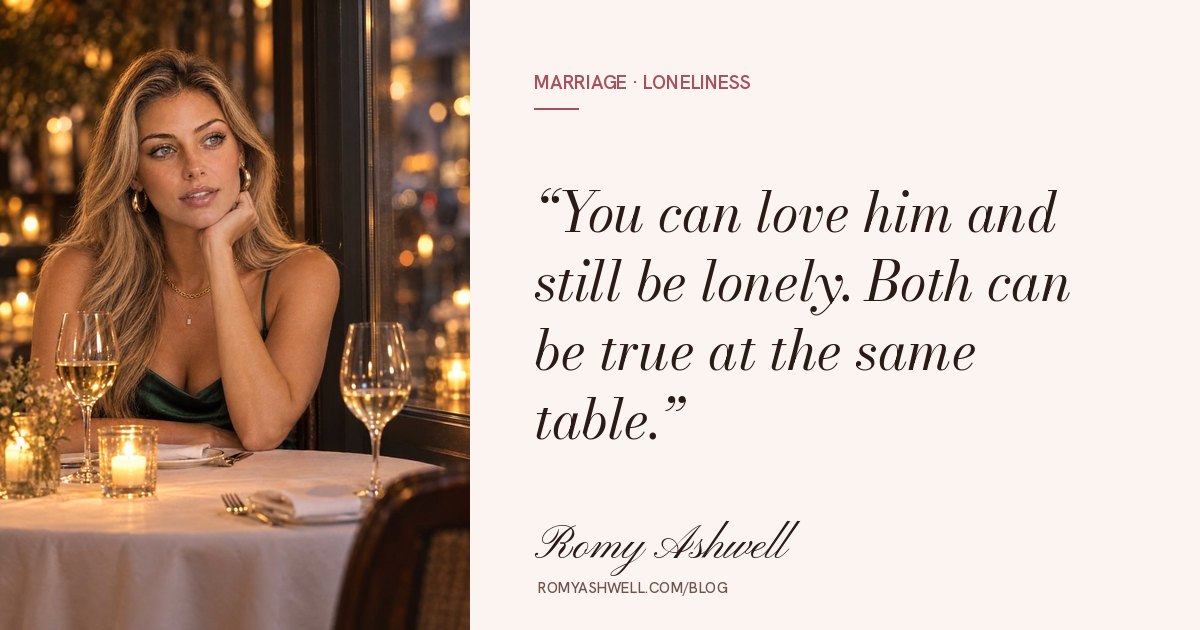
You can love him and still be lonely. Both can be true at the same table.
What to do
- Name it to yourself first. “I am lonely in my marriage.” Saying it doesn’t mean you have to leave. It means you stop gaslighting yourself.
- Ask for one specific thing. Not “you never pay attention to me.” Try: “When I tell you about my day, I need you to put your phone down for five minutes.”
- Watch the follow-through, not the promise. “I’ll change” is a sentence. Change is a year.
- Suggest couples counseling. If he’s willing, a licensed couples therapist can help you both see the pattern. If he refuses to even try, that is also an answer.
- Rebuild your own connection: friends, family, things that are yours. Your loneliness deserves care whatever you decide.
“Don’t worry about it, I know how busy you are.”
“I’ve been feeling really alone in this marriage. I need us to talk about it this weekend, properly, phones away.”
The Quiet Signs
21 quiet signs he isn’t choosing you, and the ones that say you’ve stopped choosing yourself. A short book, free.
Read it free →Neglect vs abuse
Emotional neglect is painful but different from emotional abuse. If your partner insults, threatens, isolates or controls you, or you feel afraid of him, please reach out to the hotline at the top of this page. You don’t have to be sure, and you don’t have to leave to call.
My marriage wasn’t abusive. It was absent. Act III of Choose Yourself is that story: “You can love him and still be lonely.”
Questions people ask
What are examples of emotional neglect in a marriage?
A partner who rarely asks about your feelings or day, forgets things that matter to you, withdraws when you’re upset, leaves you to plan everything, and is attentive in public but absent at home.
Is emotional neglect a reason for divorce?
It can be. Many people try naming the problem clearly and couples counseling first. If the pattern continues after honest attempts, or your partner won’t engage, many decide to leave. Only you can make that choice.
Is emotional neglect the same as emotional abuse?
No. Neglect is a pattern of absence and unresponsiveness. Abuse involves active harm such as insults, threats, control or isolation. If you feel afraid of your partner, contact a domestic violence hotline.
What are bids for connection?
A term from Dr. John Gottman’s research for small attempts to connect, like a comment, question or touch. Couples who turn toward each other’s bids more often tend to stay together.
General education, not therapy, counseling, medical or legal advice. If you’re struggling, a licensed professional can help with your situation. Romy Ashwell is an AI-generated character; her story is fictional and illustrative. About Romy.